
These are key points :
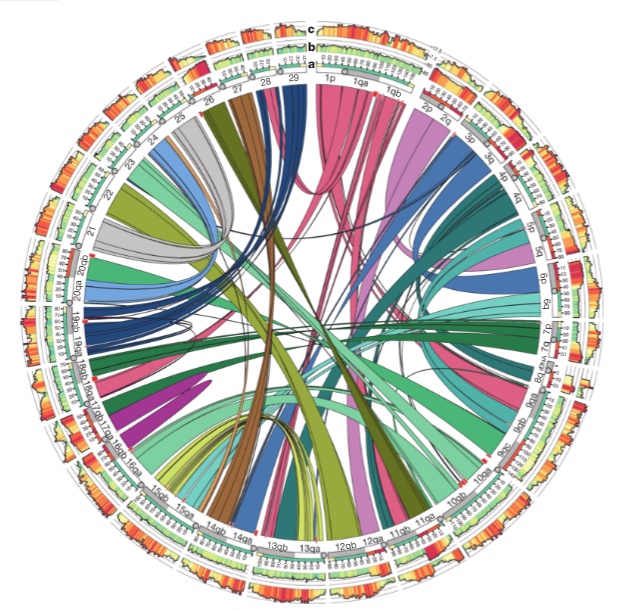
- The whole-genome duplication 80 million years ago of the common ancestor of salmonids provides unique opportunities to learn about the evolutionary fate of a duplicated vertebrate genome in 70 extant lineages.
- A high-quality genome assembly for Atlanticsalmon (Salmo salar) show that large genomic reorganizations, coinciding with bursts of transposon-mediated repeat expansions, were crucial for the post-Ss4R rediploidization process.
- Comparisons of duplicate gene expression patterns across a wide range of tissues with orthologous genes from a pre-Ss4R outgroup unexpectedly demonstrate far more instances of neofunctionalization than subfunctionalization.
- Genes that were retained as duplicates after the teleost-specific whole-genome duplication 320 million years ago were not more likely to be retained after the Ss4R, and that the duplicate retention was not influenced to a great extent by the nature of the predicted protein interactions of the gene products.
- The Atlantic salmon assembly can serve as a reference sequence for the study of other salmonids for a range of purposes.